
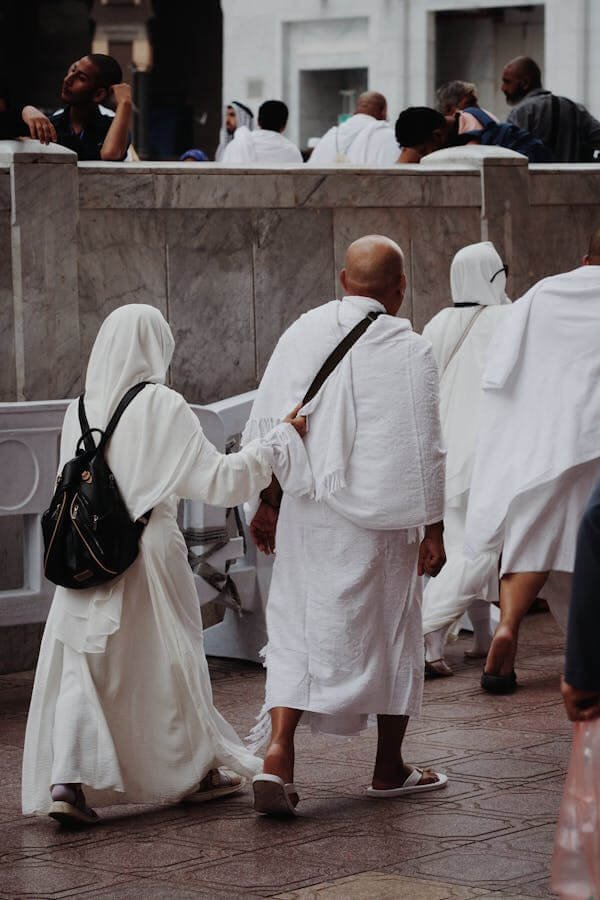
The sacred journey of Hajj represents one of the most significant spiritual experiences in a Muslim woman’s life. As preparations begin for Hajj 2025, female pilgrims face unique considerations that deserve special attention. This comprehensive Hajj 2025 guide for women covers everything from preparation and accommodation to health concerns and safety, helping you navigate this blessed journey with confidence and peace of mind.
The Saudi authorities have implemented several improvements for women pilgrims in 2025, including expanded female-only sections, increased women security personnel, and enhanced health services specifically for women. These changes reflect a growing recognition of women’s needs during the pilgrimage and aim to make the experience more accessible and comfortable for female pilgrims from around the world.
Pre-Departure Preparation Specifically for Women
Documentation and Requirements
Female pilgrims must ensure their documentation is complete and meets the specific requirements for women travelers to Saudi Arabia for Hajj 2025:
- Valid passport with at least six months’ validity beyond your return date
- Hajj visa specifically for 2025 (application opens in Muharram 1447)
- Vaccination certificates, including the mandatory meningococcal vaccine and any other required immunizations
- Travel insurance with comprehensive coverage for pilgrimage activities
- Printed and digital copies of all documents, including accommodation confirmations
- Recent passport-sized photographs with appropriate Islamic dress (face visible, hair covered)
Fatima Ahmed, a 45-year-old pilgrim from Canada who performed Hajj in 2023, shares: “Having digital copies of all my documents saved on my phone and in the cloud gave me peace of mind. I also carried a small document holder around my neck under my abaya, which kept everything accessible yet secure.”
Traveling With or Without a Mahram in 2025
One of the most significant changes in recent years has been the evolving regulations regarding women traveling without a male guardian (mahram) for Hajj:
- Women under 45 years generally still require a mahram according to Saudi regulations
- Women aged 45 and above can now travel with organized groups of other women
- The 2025 Hajj season will see an expansion of the “Women’s Group Visa” program, allowing more women to travel together
- Women without mahrams must register with approved Hajj agencies that provide designated female guides and escorts
“The group visa option was perfect for me,” says Amina Begum, a 52-year-old widow who performed Hajj in 2024. “I traveled with five other women from my community, and we had a female guide who helped us navigate every step of the journey.”
Health Consultations and Considerations
Pre-departure health preparations are essential for women planning to undertake the Hajj:
- Schedule a comprehensive check-up at least 3-4 months before departure
- Discuss menstrual cycle management with your healthcare provider, including options for delaying periods during critical Hajj days if desired.
- For those with chronic conditions, obtain a medical certificate in English and Arabic detailing your condition and medications.
- Pregnant women should consult with their obstetrician about travel safety and obtain necessary documentation.
- Consider the physical demands of Hajj and begin conditioning exercises months in advance.
Dr. Layla Hassan, a gynecologist who specializes in travel medicine, advises: “Many women don’t realize how physically demanding Hajj can be. I recommend starting a walking program at least six months before, gradually building up to walking 5-7 miles comfortably while wearing appropriate footwear.”
Packing Essentials for Female Pilgrims
Appropriate Clothing and Ihram Guidelines
Women’s clothing requirements differ from men’s during Hajj:
- Women do not wear specific Ihram garments but must adhere to modest Islamic dress
- Pack 4-5 prayer outfits/abayas in lightweight, breathable fabrics (cotton blends work well)
- Bring 5-7 hijabs/scarves (including some quick-drying options)
- Modest, loose-fitting clothing in light colors to reflect heat
- Comfortable, sturdy walking shoes (broken in before travel)
- Flip-flops/sandals for bathroom facilities
- Consider packing a lightweight prayer abaya that folds into a small pouch for convenience
“I brought clothing that could be layered,” shares Zahra Malik, who performed Hajj at age 35. “The temperature variations between air-conditioned hotels and the outdoor heat can be extreme, so layers helped me adjust quickly.”
Female-Specific Health and Hygiene Products
Women have specific hygiene needs that require careful packing:
- Sufficient supply of menstrual products (even if not expecting your period)
- Travel-sized bidet bottle or portable water sprayer
- Alcohol-free wet wipes and hand sanitizer
- Unscented toiletries (as fragranced products are prohibited in the Ihram)
- Medications for urinary tract infections and yeast infections
- Anti-chafing balm for thighs and sensitive areas
- Cooling spray for hot flashes and heat management
Nadia Patel, a pharmacist who performed Hajj in 2024, suggests: “Bring medications in original packaging with prescription labels. I also recommend packing electrolyte powder sachets specifically formulated for women, as our hydration needs differ during intense physical activity.”
Security Items and Organizational Tools
Keeping your belongings safe and organized is crucial:
- Under-clothes money belt or secure pouch for valuables
- Crossbody bag with anti-theft features
- Phone lanyard to prevent dropping or theft in crowds
- Luggage locks and identifiers
- Packing cubes to organize clothing by category
- Small backpack for daily essentials during rituals
- Waist pouch for keeping critical items close
“I used a system of color-coded packing cubes,” explains Halima Omar, a 40-year-old teacher. “Green for clean clothes, blue for toiletries, red for medications, and yellow for electronics and documents. This made sharing a room with other women much easier as my things stayed organized.”
Women’s Accommodation Options in Makkah and Madinah
Women-Only Sections and Facilities
The 2025 Hajj season features expanded accommodation options specifically for women:
- Designated women-only floors in many hotels near the holy sites
- Female-staffed sections with specialized services
- Hotels with dedicated prayer spaces for women
- Accommodation with enhanced privacy features
- Women-only shuttle services to and from holy sites
- Properties with female security personnel
According to the Saudi General Authority for Statistics, accommodation with women-only facilities has increased by 35% for the 2025 Hajj season, reflecting the growing number of female pilgrims traveling independently or in women’s groups.
Safety Considerations When Choosing Accommodation
When selecting your accommodation, prioritize:
- Properties with 24-hour security and CCTV surveillance
- Hotels with female staff available around the clock
- Accommodation with emergency medical services nearby
- Buildings with clear evacuation procedures and safety features
- Properties with secure room locks and safety deposit boxes
- Hotels with positive reviews from female travelers
- Locations with well-lit surroundings and safe access routes
“Location matters enormously,” advises Maryam Siddiqui, a three-time Hajj pilgrim. “I’ve found that staying slightly further but on a quieter street can be better than being closer to the Haram but on a congested route. It’s about the quality of your journey to prayer, not just the distance.”
Accommodation Proximity to Masjid al-Haram
Consider these factors when evaluating proximity:
- Walking distance to the women’s entrances of the holy sites
- Availability of women’s prayer areas along the route
- Accessibility factors (wheelchair ramps, elevators)
- Shuttle services with women-only seating options
- Distance to female medical facilities
- Proximity to women’s restrooms and wudu (ablution) areas
- Access to women’s shopping areas for necessities
The newly enhanced women’s entrance to Masjid al-Haram (21.4229, 39.8257) has been expanded for 2025, with additional security personnel and guidance services specifically for female pilgrims.
Performing Hajj Rituals as a Woman
Women’s Specific Guidance for Tawaf and Sa’i
Female pilgrims have specific considerations during key rituals:
- During Tawaf (circumambulation of the Kaaba), women are advised to maintain a modest pace and stay toward the outer circles if possible
- Women may perform Tawaf at any time of day, but early morning (after Fajr) and late evening (after Isha) typically offer less crowded conditions.
- During Sa’i (walking between Safa and Marwa), women can utilize the ground floor or upper levels, with the middle level often being less congested.
- Unlike men, women do not need to perform Ramal (brisk walking) during any portion of Tawaf.
- Women may pray the two rak’ahs after Tawaf anywhere in the Haram, not necessarily at Maqam Ibrahim if that area is crowded.
Aisha Rahman, a Hajj guide for women’s groups, recommends: “For elderly women or those with mobility issues, consider using the wheelchair services available at each site. Book these in advance through your accommodation or Hajj package provider.”
Managing Menstruation During Hajj
Menstruation during Hajj is a common concern for women of reproductive age:
- If menstruation begins before entering ihram, delay your intention and the beginning of Hajj rituals
- If menstruation begins after starting Hajj, continue with all rituals except Tawaf and its associated prayers
- Tawaf al-Ifadah (the essential Tawaf) must be performed in a state of ritual purity, so it may be delayed until menstruation ends
- Consult scholars available at the women’s guidance centers in the Haram for specific situations
- Menstrual management medications are available, but should be discussed with your doctor before travel
- Pack sufficient supplies even if you’re not expecting your period
“I unexpectedly got my period during Hajj,” shares Khadija Yusuf, 29. “The women’s religious guidance center at the Haram was incredibly helpful. A female scholar advised me on which rituals I could continue and which I needed to postpone.”
Prayer Facilities for Women at Holy Sites
The 2025 Hajj season includes significant improvements to women’s prayer facilities:
- Expanded dedicated women’s sections in Masjid al-Haram and Masjid an-Nabawi
- Air-conditioned prayer halls specifically for women
- Additional female religious guides are stationed throughout the women’s areas
- Enhanced cleaning schedules for women’s sections
- Improved signage in multiple languages directing to women’s areas
- Designate quiet spaces for the elderly or nursing women
- Additional drinking water stations in women’s sections
“The women’s section in Masjid al-Haram has been transformed,” notes Ruqaiya Ali, who has performed Hajj three times since 2015. “There’s now a much better organization, clearer announcements in women’s areas, and the addition of female guides who can answer questions has made a tremendous difference.”
Women’s Safety and Security During Hajj 2025
Navigating Crowds as a Female Pilgrim
Crowd management is critical for women during Hajj:
- Move in groups of at least three women when possible
- Establish meeting points in case of separation
- Wear distinctive clothing or accessories to help group members identify each other
- Consider using tracking apps that work offline to locate group members
- Avoid peak hours for major rituals when possible
- Learn key phrases in Arabic related to emergencies and assistance
- Utilize women-only paths and entrances where available
For 2025, the Saudi authorities have increased the number of female security personnel by 40% compared to previous years, with specialized training in assisting women pilgrims in crowded situations.
Emergency Services for Women
Know the available emergency resources:
- Memorize the women’s emergency helpline: 911 (general) and the special women’s assistance number: 937
- Locate women’s medical stations at each major site (marked with pink signage)
- Identify female security personnel (wearing distinctive uniforms with purple badges)
- Download the “Hajj Safety” app with its women’s assistance feature
- Register with your country’s consular services before departure
- Carry a card with your medical information, blood type, and emergency contacts
- Learn the location of women’s lost and found centers
“When I felt unwell during tawaf, a female security officer immediately directed me to a women’s medical station,” recalls Sumaya Ahmad, 50. “The care was prompt and respectful, with female medical staff who understood my concerns.”
Communication and Staying Connected
Maintaining communication is essential for safety:
- Purchase a Saudi SIM card with sufficient data upon arrival
- Carry a portable charger/power bank at all times
- Download offline maps of Makkah and Madinah
- Use waterproof phone cases to protect against sweat and water
- Set up emergency contacts on your phone’s lock screen
- Establish daily check-in times with travel companions
- Join women’s Hajj WhatsApp or Telegram groups for your accommodation or travel group
The 2025 Hajj season introduces enhanced Wi-Fi coverage throughout holy sites, with stronger signals in women’s sections to ensure better connectivity.
Health Management for Women During Hajj
Managing Common Health Issues
Female pilgrims often face specific health challenges:
- Heat exhaustion (symptoms include dizziness, nausea, and excessive sweating)
- Urinary tract infections (increased risk due to dehydration)
- Foot problems (blisters, swelling, and muscle strain)
- Respiratory issues from dust and crowds
- Digestive problems due to dietary changes
- Menstrual complications and irregularities
- Sleep disruption affects overall wellness
“I recommend creating a small medical kit specifically for women’s needs,” advises Dr. Sana Khan, a physician specializing in travel medicine. “Include antifungal cream, urinary analgesics, blister pads, electrolyte tablets formulated for women, and any prescription medications you might need.”
Access to Female Healthcare Professionals
The 2025 Hajj features improved medical services for women:
- Increased number of female doctors and nurses at all major medical facilities
- Women’s health clinics are stationed throughout the holy sites
- Mobile medical teams with female practitioners
- Telehealth services in multiple languages, specifically for women pilgrims
- Emergency gynecological servicesare available 24/7
- Female mental health professionals for counseling and support
- Dedicated medical transport services for women
According to Saudi health authorities, the number of female healthcare providers during Hajj 2025 has increased by 50% compared to previous years, ensuring better care for women pilgrims.
Nutrition and Hydration Tips
Maintaining proper nutrition and hydration is crucial:
- Drink 3-4 liters of water daily (more during intensive ritual days)
- Consume electrolyte-rich drinks formulated for women’s nutritional needs
- Eat small, frequent meals rather than large ones
- Choose high-protein, nutrient-dense foods to maintain energy
- Carry healthy snacks like nuts, dried fruits, and protein bars
- Consider iron supplements if you’re menstruating during Hajj
- Monitor your urine color to gauge hydration (it should be light yellow)
“I found setting hydration alarms on my phone extremely helpful,” shares Jamila Hassan, 42. “Every hour, my phone would remind me to drink water, which is easy to forget when you’re focused on your prayers and rituals.”
Women’s Experiences in Madinah
Visiting Al-Masjid an-Nabawi
Madinah offers a peaceful counterpart to the intensity of Makkah:
- Women’s sections in Masjid an-Nabawi have been expanded for 2025
- Visit during less crowded times (after Fajr and between Dhuhr and Asr)
- Special women’s entrance gates are marked with green signs
- Female guides are available to provide historical context
- Women can visit the Raudah (garden) during specially designated women’s hours
- Audio guides in multiple languages are available specifically for women’s areas
- Women’s prayer beads and copies of the Quran are available for use within the mosque
“The atmosphere in the women’s section of Masjid an-Nabawi is indescribably peaceful,” shares Zainab Mahmood, 60. “I found that going for Fajr prayer allowed me the space and time for deep reflection without crowds.”
Female-Access Areas and Times
Women have specific visitation schedules for certain areas:
- Raudah access for women is typically available from 8:00 AM to 11:00 AM and 9:30 PM to 11:30 PM
- These times may be adjusted during the peak Hajj season
- Women’s visits to Uhud and other historical sites are best done in organized groups
- Quba Mosque has expanded women’s prayer halls for 2025
- The Seven Mosques area has designated paths for women visitors
- Jannatul Baqi viewing for women has specific hours posted daily
- Museum of Islamic History has women-only tour times
For Hajj 2025, a new reservation system has been implemented for women’s access to Raudah, allowing for more organized and comfortable visitation experiences.
Cultural Experiences for Women in Madinah
Beyond religious sites, Madinah offers enriching experiences:
- Women’s cultural bazaars featuring female artisans from across the Islamic world
- Special exhibitions on women’s contributions to Islamic history
- Culinary experiences with female chefs preparing traditional dishes
- Women’s heritage tours highlighting the roles of female companions of the Prophet (peace be upon him)
- Women’s lecture series and study circles in multiple languages
- Craft workshops teaching traditional skills
- Community iftars (if Hajj coincides with Ramadan) with women’s seating sections
“One of my most cherished memories was attending a henna ceremony with local women in Madinah,” recalls Laila Farooq, 38. “The sense of sisterhood transcended language barriers, and I learned so much about Saudi culture in that informal setting.”
Post-Hajj Guidance for Women
Readjustment Period and Self-Care
Returning home after Hajj requires intentional transition:
- Allow yourself physical recovery time (7-10 days minimum)
- Schedule a post-Hajj medical check-up, especially for older women
- Practice gradual reintroduction to regular activities
- Maintain the simplified lifestyle and spiritual practices developed during Hajj
- Journal about your experiences while memories are fresh
- Consider joining women’s post-Hajj support groups
- Permit yourself to process emotional experiences
“Coming home was almost as challenging as the journey itself,” admits Safiya Kareem, 55. “I found it helpful to maintain some of the rhythms of Hajj—like praying in congregation when possible and making dhikr while walking—to ease the transition.”
Maintaining Spiritual Connection
Preserving the spiritual benefits of Hajj is an ongoing process:
- Establish a consistent Quran reading practice
- Continue the habit of night prayers (Tahajjud)
- Attend women’s religious classes to deepen knowledge
- Create a dedicated prayer space in your home
- Practice regular charitable giving
- Maintain connections with women you met during Hajj
- Find opportunities to serve your local community
“My Hajj experience completely transformed my daily practices,” shares Rabia Malik, 47. “I now prioritize my spiritual growth in ways I never did before, finding small pockets of time throughout the day for remembrance and reflection.”
Sharing the Experience With Other Women
Your Hajj experience can benefit others:
- Host informal gatherings to share your journey with women in your community
- Mentor first-time pilgrims preparing for future Hajj
- Create photo books or digital presentations to educate others
- Volunteer with local Hajj preparation programs
- Participate in panel discussions at mosques or Islamic centers
- Write about your experience for community publications
- Offer practical tips to women planning their pilgrimage
“Sharing my experience has become a form of ongoing sadaqah (charity),” explains Huda Rahman, 62. “Every time I help another woman prepare for her journey, I feel the blessings of my own Hajj renewed.”
Conclusion
The Hajj pilgrimage represents a profound spiritual milestone in a Muslim woman’s life—a journey of faith, endurance, and transformation. As a female pilgrim in 2025, you’ll benefit from enhanced facilities, services, and considerations specifically designed to address women’s needs. While the physical journey may be demanding, the spiritual rewards are immeasurable.
By preparing thoroughly, understanding the unique aspects of performing Hajj as a woman, and embracing the sisterhood that develops among female pilgrims, you can focus on the spiritual essence of this sacred obligation. The bonds formed with fellow pilgrims, the challenges overcome, and the prayers offered at Islam’s holiest sites create memories and blessings that endure long after your return home.
To continue your preparation journey, join our monthly women’s Hajj preparation webinar series beginning in Muharram 1447. These sessions feature experienced female Hajj guides, scholars, and past pilgrims sharing practical advice specifically for women. Subscribe to our newsletter for women-specific updates about Hajj 2025, including announcement of new regulations, facility improvements, and spiritual preparation guidance.
May Allah accept your Hajj, ease your journey, and bless you with an experience that transforms your life and faith.
Next Stop: More Scenic Escapes You’ll Fall in Love With
🇴🇲 Oman’s 2025 Adventure Crown Jewels
- Wadi Shab Decoded: Oman’s Emerald Paradise Hike (2025 Survival Guide)
Secret cave swimming hole • Rope-free cliff jumps • When to beat the desert heat - Muttrah Souq 2025: Muscat’s Ancient Market Like a Local
*Frankincense bargaining hacks • Hidden silver jewelry stalls • Best 50-fils street eats* - Jebel Shams Unfiltered: Oman’s “Grand Canyon” on Your Terms (2025)
Balcony Walk: death traps? • Moonlight camping permits • Goat herder shortcut routes
🇶🇦 Qatar’s 2025 Must-See Gems
- Souq Waqif Unlocked: Doha’s Ancient Marketplace Secrets (2025 Guide)
Spice alley haggling tricks • Hidden courtyard shisha spots • Where locals buy gold - The Pearl-Qatar 2025: Luxury Island Hacks Beyond the Yachts
Free parking spots • Secret marina views • Affordable eats in millionaire’s playground - Khor Al Adaid Adventure: Qatar’s Desert-Meets-Ocean Miracle (2025 Update)
Dune bashing to tidal islands • Overnight Bedouin camp tips • Full moon safari magic
🇦🇪 UAE’s 2025 Must-Experience Wonders
- Dubai’s Burj Khalifa (2025): Sky-High Secrets & Skip-the-Line Hacks
Sunset at 828m • Hidden observation deck tips • Atmosphere Restaurant, worth it? - Dubai Desert Safari 2025: 7 Next-Level Experiences (Price Breakdown!)
Dune bashing upgrades • Luxury Bedouin camps • Stargazing with local guides - Sheikh Zayed Grand Mosque: Abu Dhabi’s Architectural Masterpiece (2025 Rules)
Golden hour photography spots • Dress code shortcuts • Hidden underground tours - Dubai Mall 2025: Beyond Shopping – Attractions Most Tourists Miss
Aquarium backstage passes • VR Park hidden gems • Where locals eat - UAE’s 12 Best Beaches (2025): From Secret Coves to Billionaire Yacht Spots
Free JBR stretches • Private island day passes • Fujairah’s untouched coral bays - UAE Beyond Glitz: 9 Authentic Cultural Gems (2025 Local-Approved)
Qasr Al Hosn fort tales • Al Ain oasis walks • Hidden souks with no markups - UAE Island Hopping 2025: 8 Paradises You Didn’t Know Existed
Sir Bani Yas wildlife safaris • Delma Island pearl diving • Helicopter to remote sands - UAE Perfect 7-Day Itinerary (2025 Budget: Luxury vs Thrifty Tricks)
Abu Dhabi to Ras Al Khaimah road trips • Where to splurge/save • Crowd-beating timing
🇵🇰 Pakistan’s Northern Wonders
- Skardu Travel Guide: Pakistan’s Adventure Tourism Hotspot
Trek to shimmering lakes, sleep under the Milky Way, and discover why Skardu is the crown jewel of Pakistan’s north - Hunza Valley: Pakistan’s Hidden Paradise for Adventure Seekers
Suspension bridges, ancient forts, and apricot blossoms – Hunza is the ultimate escape for thrill and tranquility - Fairy Meadows: The Ultimate Guide to Pakistan’s Mountain Paradise
Wake up to Nanga Parbat views, ride a legendary jeep trail, and camp in one of Earth’s most magical meadows - Swat Valley: The Complete Guide to Pakistan’s Switzerland
Snow-capped serenity, emerald rivers, and cozy mountain hotels – Swat is calling for your next alpine adventure
🇨🇭 Switzerland’s Alpine Dreams
- Switzerland in 2025: 10 Breathtaking Places That Prove Heaven Exists on Earth
From Jungfraujoch’s snow kingdom to Lauterbrunnen’s valley of 72 waterfalls - Lucerne in 2025: A Fairytale City of Lakes, Mountains & Medieval Magic
Chapel Bridge sunrises, hidden Old Town squares, and Rigi Mountain steam trains - Swiss Train Journeys in 2025: 5 Scenic Routes That Will Blow Your Mind
Glacier Express panoramas and Bernina Railway’s spiral viaducts
🇸🇪 Sweden’s Nordic Wonders
- Sweden in 2025: 10 Magical Places That Feel Like a Nordic Dream
From Stockholm’s archipelago to Lapland’s ice hotels – where Scandinavian fairytales come alive - Stockholm in 2025: 2 Days of Island-Hopping, Culture & Cozy Cafés
Gamla Stan secrets, Vasa Museum must-sees, and fika spots locals love - Chasing the Northern Lights in Sweden: A 2025 Guide to Arctic Wonders
Abisko’s legendary skies and unique Sami cultural experiences
🇵🇹 Portugal’s Enchanting Discoveries
- Portugal in 2025: 10 Magical Places You Won’t Believe Exist
From Sintra’s fairy-tale palaces to the Azores’ volcanic lakes – beyond the postcards - The Ultimate Lisbon Travel Guide (2025): 3 Perfect Days in Portugal’s Capital
Tram 28 secrets, Belém pastry wars, and miradouro sunset rituals - Flavors of Portugal: 12 Traditional Dishes You Must Try in 2025
Pasteis de nata to alheira – where chefs and grandmothers agree
🇳🇴 Norway’s Natural Wonders
- Norway in 2025: 10 Epic Nature Adventures That Will Take Your Breath Away
Fjord kayaking, pulpit rock hikes, and glacier walks in the Arctic - A Week in Norway: The Ultimate 7-Day Itinerary for First-Timers (2025 Guide)
Oslo to Bergen with secret stops only locals know - Chasing the Northern Lights in Norway (2025 Guide): When, Where & How to See Them
Best Arctic hideaways and photography tips from experts